
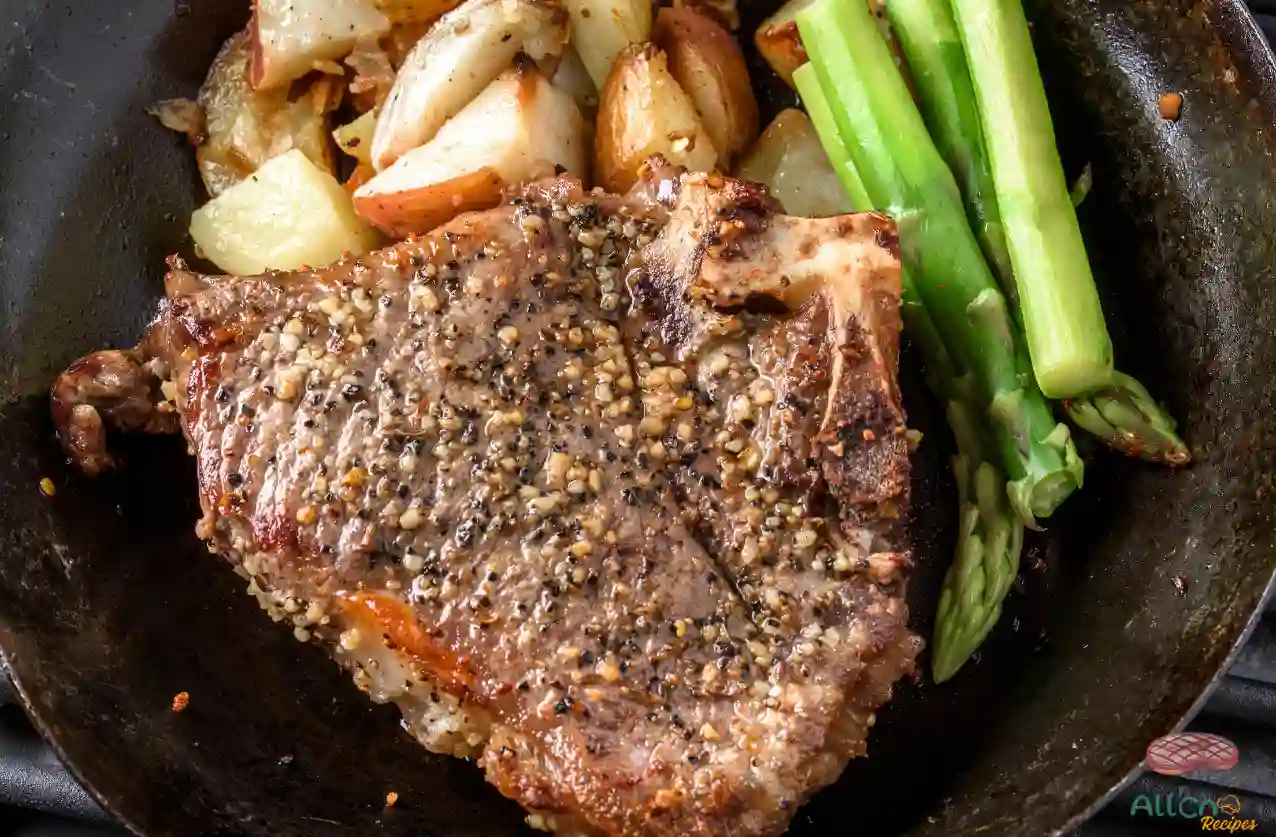
I’ve cooked a lot of steaks. Like… a lot. Enough that I still get genuinely excited when I hear that first proper sizzle hit the pan and think, “Yep, this one’s going to be good.” Pan searing a steak never really gets old, especially when you understand what’s actually happening in the pan instead of just following steps and hoping.
This pan seared steak recipe isn’t about shortcuts or flashy tricks. It’s about control , heat control, timing, and knowing how doneness, flavor, and texture all play together. Once you get that part, cooking steak stops feeling stressful and starts feeling kind of fun.
What Pan Searing Really Does to a Steak
Browning Is Flavor, Not Decoration
Pan searing is all about surface contact. When a steak hits a hot pan, proteins and sugars on the surface react to heat and create that brown crust everyone loves. That crust isn’t just for looks , it’s where a huge amount of flavor comes from.
What trips people up is thinking searing is about speed. It’s not. You can rush a steak and still miss the crust completely. What matters more is a dry surface, a hot pan, and uninterrupted contact. When those line up, the steak does most of the work for you.
Ingredients (Simple on Purpose)
Steak Doesn’t Need Much Help
I’ve tested a lot of variations over the years, and I keep coming back to the same short list. Fewer ingredients mean you can actually taste what’s happening.
- 1 steak (ribeye, strip, or sirloin)
- Salt and freshly cracked black pepper
- 1 tablespoon high smoke-point oil (avocado or canola)
- 1 tablespoon butter (optional, but very useful)
- 1 garlic clove, lightly smashed
- Fresh thyme or rosemary, optional
That’s it. No sugar. No marinades. No distractions.
Preparing the Steak Before Cooking
Drying Matters More Than Temperature
There’s a lot of debate about bringing steak to room temperature. I’ve tested it both ways. The difference is minor. Dryness, on the other hand, makes a huge difference.
Pat the steak dry thoroughly. If it still looks glossy, keep going. Moisture creates steam, and steam prevents browning. This is one of those details that sounds boring but pays off immediately.
Season generously with salt and pepper right before cooking. Not earlier. Earlier pulls moisture back to the surface, which works against the sear you’re trying to build.
How to Pan Sear a Steak Properly
Heat First, Then Commitment
Use a heavy pan , cast iron is ideal because it holds heat well, but thick stainless works too. Set it over medium-high heat and let it preheat longer than feels necessary. This is where patience matters.
Add the oil once the pan is hot. You want it shimmering, not smoking aggressively. A little smoke is fine. A lot of smoke means you’ve overshot and should dial it back slightly.
Place the steak in the pan and listen. A strong sizzle tells you the surface temperature is right. Now leave it alone. Don’t move it. Don’t press it. Let the pan and steak stay in contact.
For a steak about 1 inch thick, 3 to 4 minutes on the first side usually builds a solid crust. Flip once. If it resists, it’s not ready yet , that’s physics, not stubbornness.
I go deeper into the mechanics of crust formation in this guide on how to sear a steak, especially why dryness and uninterrupted contact matter so much.
Butter Basting and Flavor Control
After flipping, I often lower the heat slightly and add butter, garlic, and herbs. Tilt the pan and spoon the butter over the steak. This does two things: it adds flavor and helps regulate surface heat so the crust doesn’t burn before the inside reaches the doneness you want.
Doneness: Rare to Well-Done (Without Guessing)
Precision Beats Guesswork
This is where a thermometer earns its keep. I still use one, even after years of cooking steak.
- Rare: pull at ~120–125°F
- Medium-rare: pull at ~130–135°F
- Medium: pull at ~140–145°F
- Medium-well to well: above that, depending on preference
Remember, the steak keeps cooking as it rests. I usually pull it a few degrees early and let carryover heat finish the job.
Resting and Serving
Rest Is Part of Cooking
Once the steak comes off the pan, let it rest for at least 5 minutes. This allows the internal juices to redistribute instead of spilling out when you cut into it.
Slice against the grain for tenderness. Taste before adding anything else. A properly pan seared steak usually doesn’t need much beyond maybe a pinch of flaky salt.
This pan seared steak recipe isn’t about perfection. It’s about understanding what’s happening and adjusting as you go. Once you get comfortable with heat, dryness, and doneness, cooking steak becomes less about rules and more about intuition , backed by a little science that actually makes sense.

You know how some people chase the perfect sourdough loaf or the fluffiest pancakes? For me, it’s all about steak doneness. That perfect moment when the center is blushing pink, the juices are sealed in, and the crust has that beautiful, smoky edge? That’s my happy place.
It started with frustration, honestly. I ruined a lot of good cuts back in the day, undercooked, overcooked, chewy disasters. One night, I served my date a “medium rare” Delmonico that was practically raw in the middle; she still brings it up.
So I dug in. Learned how temperature works. Got a thermometer. Learned to trust my fingers, my eyes, and the timing. I turned my kitchen into a bit of a steak lab, and yeah, I dragged a few friends along as taste testers.
Now, I help people hit that sweet spot, whether you like your steak rare, medium, or (hey, no judgment) well-done. I’ll show you how to cook it with confidence, flavor, and just the right balance of rich and healthy.
On this blog, you’ll find guides on doneness, smart tips on choosing cuts, my favorite spice blends, and ways to keep things flavorful without drowning everything in butter (though sometimes… it’s worth it).
I’m not here to gatekeep steak. I’m here to help you nail it, every time.
Let’s fire it up.
- Pan Seared Steak Recipe: Perfect Crust, Precise Doneness – December 20, 2025
- Why Medium Rare Matters More Than You Think – November 17, 2025
- How to Make Steak in Cast Iron – November 8, 2025
Leave a Reply