
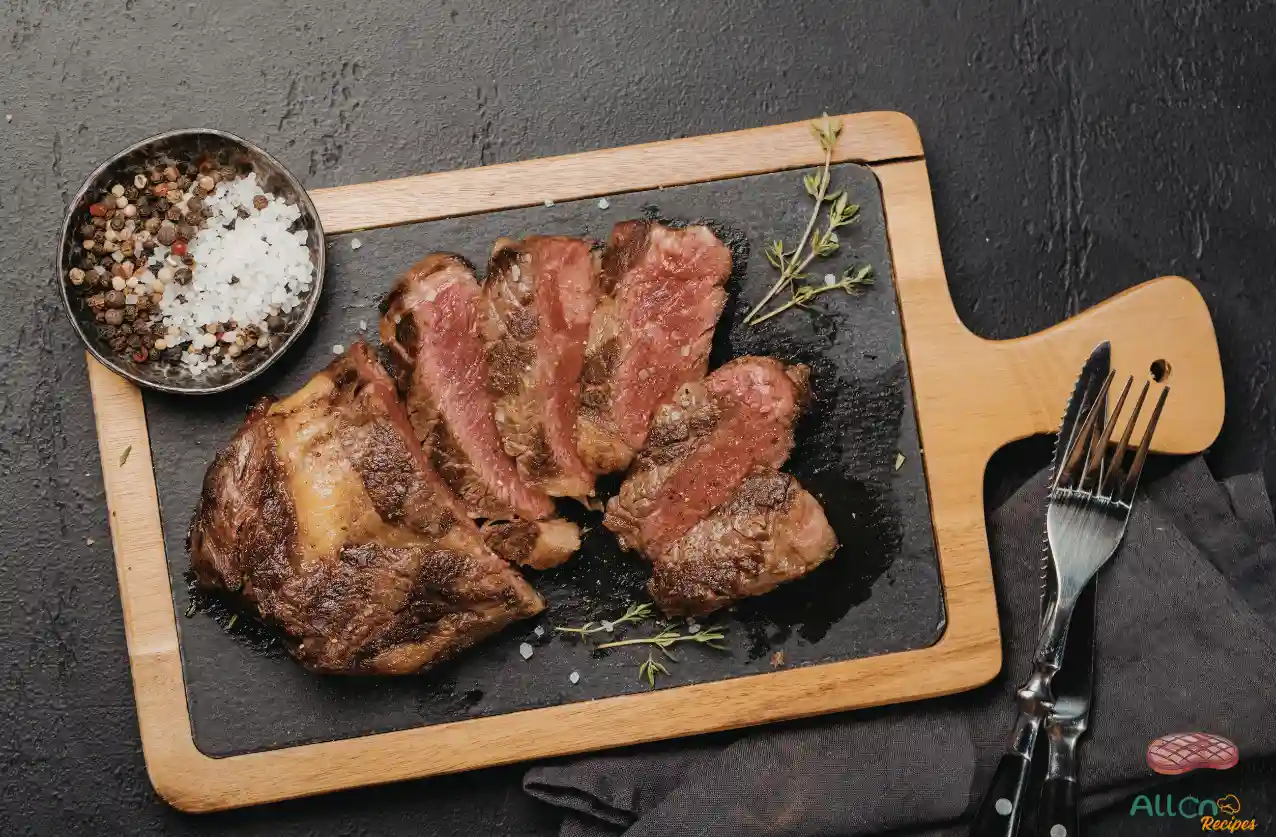
People talk about searing a steak like it’s some secret skill you either have or you don’t. Like once you “get it,” you’re in a club. I don’t buy that. Most of the time when a steak doesn’t sear properly, it’s not because someone’s bad at cooking. It’s because something got rushed, or someone hovered, or they tried to fix a problem that wasn’t actually happening yet.
I didn’t grow up calling it “searing.” We just cooked steak in a pan and hoped for the best. Over time, after enough slightly disappointing dinners, patterns started to show up. Not rules. Patterns. That’s what this is.
Start With the Steak (Dry Means Dry)
If the Steak Is Wet, You’re Already Behind
Before anything goes on the stove, deal with the steak. Specifically, the surface of it. If it’s shiny, damp, or even a little slick, it’s not ready. Moisture turns into steam, and steam is the opposite of what you want.
I pat the steak dry, walk away, come back, and pat it again. Sometimes I think I’m being dramatic. Then I remember every pale steak I’ve ever cooked and keep going.
Salt and pepper go on right before cooking. Not earlier. Earlier just pulls moisture back out and undoes all the work you just did. If salt ends up on the counter, that’s normal. You’re cooking, not staging a photo shoot.
The Pan Matters More Than People Admit
Use a Pan That Won’t Panic
I use cast iron because it doesn’t argue with me. It gets hot and stays hot. Stainless steel works too if it’s heavy. Thin pans lose heat the second the steak touches them, and then you’re chasing temperature the whole time. I’ve done that. It’s annoying.
Nonstick technically works, but it doesn’t love this job. Neither do I, honestly.
If cast iron is your pan of choice, this cast iron steak recipe breaks down the full cook with exact timing and resting tips.
Heat the Pan Longer Than Feels Necessary
This Is Where Most People Rush
I heat the pan longer than feels reasonable. This used to be my biggest mistake. I’d think, “Yeah, that’s probably hot enough,” and it never was.
When a drop of water hits the pan and disappears instantly, you’re close. When oil shimmers and looks slightly nervous, you’re there. If it smokes a little, I don’t panic. If it smells burned, I pull back and try again. Nobody nails this every single time.
Put the Steak Down and Don’t Babysit It
Sizzle Is Your Reassurance
When the steak hits the pan, it should sizzle loudly. That sound does a lot of emotional heavy lifting for me. If it doesn’t sizzle, I know I messed up, but I still don’t move it. Moving it just makes things worse.
This is the part where people hover. Don’t. Put the steak down and leave it alone. Not forever. Just long enough.
I don’t time it perfectly. I count a little, get distracted, then remember to check. If the steak doesn’t release easily, it’s not ready. That’s not failure. That’s information.
I flip once. I don’t believe in flipping for fun.
Butter Is Optional (But I Usually Do It Anyway)
This Is About Smell as Much as Flavor
Sometimes I add butter and garlic. Sometimes I don’t. If I do, it’s usually because I want the kitchen to smell good, not because the steak desperately needs it.
I tilt the pan and spoon butter over the steak until I feel satisfied, which is not a scientific measurement but it works for me.
Knowing When It’s Done (And When to Stop)
Thermometer or Gut, Both Improve With Time
I don’t always use a thermometer, but when I do, I pull the steak around 130–135°F and trust it to finish on its own. It always does. Steak keeps cooking after you take it off the heat, which feels unfair but useful.
If you don’t use a thermometer, that’s fine. You’ll get better at this just by paying attention. Everyone does, whether they admit it or not.
Rest the Steak (Even If You’re Impatient)
This Is the Part I Used to Skip, Don’t
I rest the steak. Five minutes minimum. Longer if I can stand it. Every time I’ve skipped this, I regretted it. Every single time.
Resting keeps the juices where they belong instead of all over the cutting board.
How I Finish It
Slice Against the Grain and Eat
I slice against the grain because slicing the other way makes even a good steak feel like work. I learned that one the hard way.
That’s it. That’s how I sear a steak. Not perfectly. Not the same way every time. Just consistently good enough that I don’t stress about it anymore. And honestly, that’s the goal.

I grew up in a house where red meat was practically a love language. Sundays meant steaks on the grill, buttery potatoes on the side, and someone yelling, “Who wants the corner cut?” It was delicious… but not exactly light.
Years later, I found myself craving those meals, but also trying to eat a little cleaner, less heavy, less guilt, fewer naps after dinner. I tried swapping things out, but the flavor just didn’t hit the same. I didn’t want less, I wanted better.
That’s when I got curious. What if I could cook steakhouse-style meals with a few smart changes, still rich, still indulgent, but just a little more balanced?
Spoiler: you totally can. And that’s what this blog is all about.
Here on All On Recipes, you’ll find my take on the classic Delmonico steak, plus side dishes, marinades, and healthier spins that won’t make you miss the original. I use real ingredients, skip the fuss, and aim for flavor that punches way above its prep time.
This isn’t a salad blog (though I love a good salad with my steak). It’s a space for anyone who loves bold food, simple cooking, and maybe sneaks a little extra garlic in every recipe.
So whether you’re a seasoned home cook or want to finally get that perfect crust on a steak, I’ve got you.
Now, grab a pan. Let’s make something that smells amazing.
– Ree
- Meatloaf Internal Temperature Guide (Done Right) – February 15, 2026
- How to Sear a Steak – December 18, 2025
- Chuck Delmonico Steak: What It Is and Why Chefs Love It – September 13, 2025
Leave a Reply