

This whole thing started because I couldn’t get one meal out of my head: a Delmonico steak I had years ago at a tiny, no-name spot. It was buttery, tender, ridiculously good. And I remember thinking, “Why can’t I make this at home?”
So, I tried. And failed. And tried again. Eventually, I figured out how to recreate that magic, not just for myself, but for my friends (who now ask if I do catering, I don’t, by the way).
That’s when I realized: it doesn’t take a culinary degree to make incredible meals. It just takes a little curiosity, a few smart swaps, and a deep love for garlic.
On my blog, you’ll find:
🥩 Simple, steak-forward recipes
🌿 Healthier takes that don’t taste “healthy”
🍷 Sides and sauces that make any dinner feel special
🔥 Tips to master the perfect sear (no fancy pan required)
If you love real food, bold flavor, and meals that feel like a treat without the food coma, you’re going to feel right at home here.
Pull up a chair. Let’s cook something amazing.
Eliza _ Creator of AllOnRecipes.com
- How Long to Cook Meatloaf at 350°F (Perfect Every Time) – January 29, 2026
- Meatloaf Cooking Time Chart (350°F) – January 29, 2026
- best meatloaf ever will knock your socks off – January 4, 2026
There’s a moment, right before a steak hits a hot pan, when you kind of wonder if you’re about to nail dinner… or ruin a good piece of meat. I’ve been there more times than I’d like to admit. But honestly, once you understand a few small details, pan-frying a steak becomes one of those almost embarrassingly simple “why didn’t I do this sooner?” kitchen skills.
And the best part ? You don’t need a grill, or fancy tools, or anything beyond a solid pan and a little patience. If you’re craving that rich, golden crust and tender center, the kind you usually pay too much for at a steakhouse, you can make it right at home. Let me walk you through exactly how I do it, flaws, hesitations, and little joys included.
Choose the Right Pan & Prep the Steak
Okay, so technically you can cook a steak in almost any pan, but I’m going to be honest: a cast-iron skillet really does make a difference. It holds heat like nothing else, and heat is basically the whole game here . Thin pans lose heat too fast and you end up with a gray, sad steak, been there, sadly.
Before seasoning, the most important step (I’m serious, it makes or breaks things) is drying the steak. Pat it with paper towels until it doesn’t feel slippery anymore. Some people insist on bringing the steak to room temperature, but honestly… I haven’t noticed a life-changing difference. Drying? Yes. That matters. Room temp? Eh, not as much.
Season generously , don’t be shy with salt and pepper. If some falls on the counter, just smile and pretend it was on purpose.
Preheat the Pan Until It’s Actually Hot
If there’s one step most home cooks underestimate, it’s this one. Preheating takes longer than you think. I still catch myself being impatient sometimes. Set your cast iron over medium-high (or high if you trust your stove not to betray you) and give it a few minutes.
A good test? Flick a drop of water in. If it just sits there, nope. If it sizzles violently and disappears, you’re ready. Add a thin layer of high-smoke-point oil, avocado, canola, grapeseed. Don’t use extra-virgin olive oil here unless you enjoy burnt flavors.
When the oil shimmers , take a breath. It’s time.
Sear the Steak Without Touching It
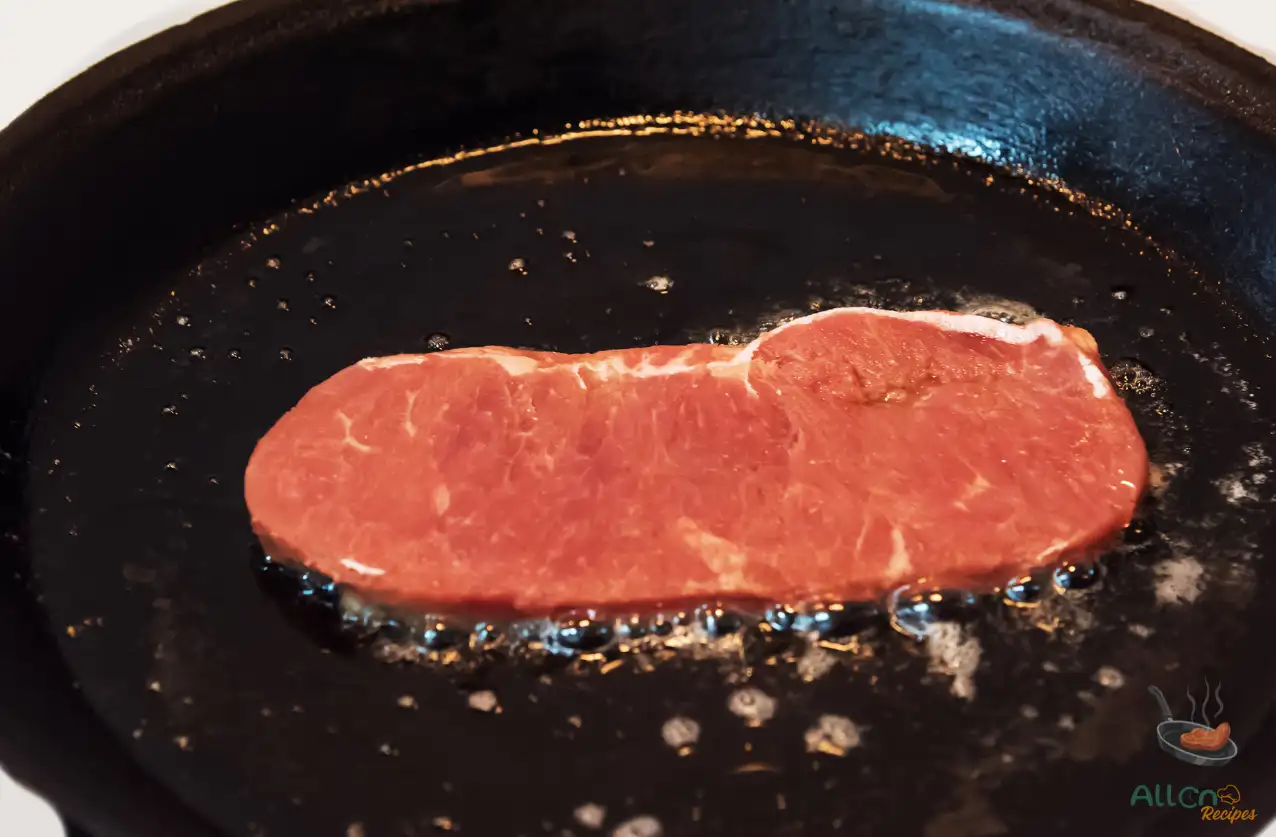
Gently place the steak in the pan, ideally laying it away from you so you don’t end up with little oil freckles on your arm. You should hear a strong sizzle. It’s a good sound. A confident sound.
Now here’s where most people (me included, years ago) mess up : don’t poke at it. Don’t slide it around. Don’t lift it to “ check. ” Let it be. If you move it too soon, the crust never gets a chance to form.
For a 1-inch steak, around 3 to 4 minutes on each side will land you in the medium-rare zone. Flip once, just once. There’s something satisfying about seeing the seared side for the first time; it feels like a small victory.
If you want to elevate things, like, “I deserve a treat today” elevate, add a spoonful of butter near the end along with a smashed garlic clove and a sprig of thyme or rosemary. Tilt the pan and baste the melted butter over the steak. Your kitchen will smell unfairly good.
Check Doneness & Let the Steak Rest
I know some cooks swear they can tell doneness by touch, but if you have a meat thermometer, use it. It makes life easier and the steak more consistent. For medium-rare, aim for around 130–135°F (54–57°C). It’ll rise a few degrees as it rests.
Speaking of resting, don’t skip it. Let the steak chill out on a plate for 5–10 minutes. If you cut into it too early, all those beautiful juices escape and the steak ends up dryer than it deserves to be. Trust me, I’ve learned this lesson the hard way.
Serve, Slice, and Enjoy
Slice against the grain. It matters more than you’d expect .
Pair your steak with whatever feels right, maybe roasted vegetables if you want balance, maybe mashed potatoes if you’re leaning into indulgence, maybe just a simple salad if you’re pretending to be responsible.
And if the crust didn’t come out perfect, don’t beat yourself up. Usually it’s one of two things: the pan wasn’t hot enough, or the steak wasn’t dry enough. Fix those and your next attempt will be miles better. Cooking steak is one of those little rituals that feels intimidating at first, but with a few tries, it becomes second nature.
Pan-frying a steak isn’t just a technique, it’s a tiny pleasure . A mix of sound, smell, and anticipation that pays off beautifully when you slice into that first bite.
Leave a Reply