
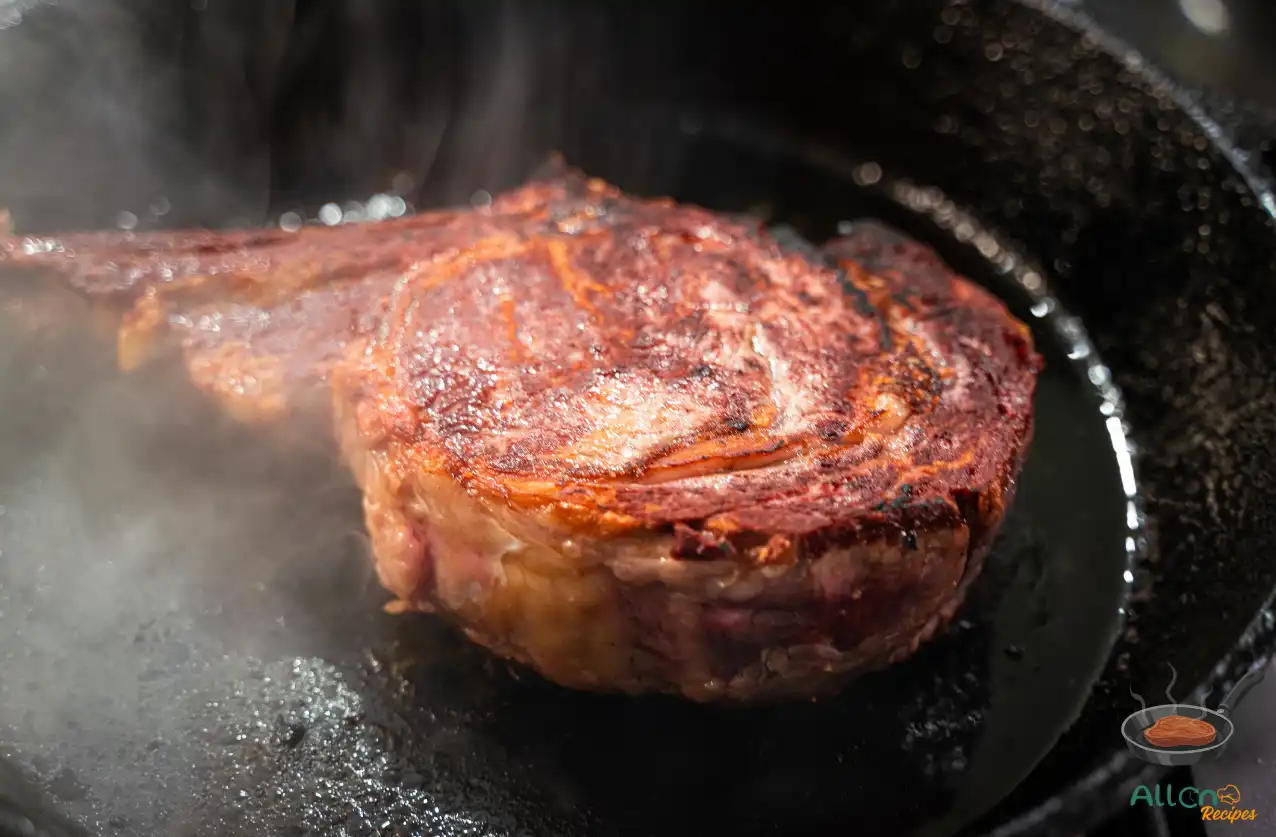
I’ll be honest, you can own the fanciest knives, Himalayan salt, even Wagyu from some online boutique, but if your cast iron isn’t hot enough, you’re still gonna end up with a sad, gray slab of meat. I’ve done it. Once. Okay, twice. Maybe three times. Point is, the skillet decides everything.
Cooking steak on cast iron isn’t hard; it’s just precise. And weirdly emotional. The moment the steak hits the pan, that sharp hiss, you’ll know if you nailed the preheat or not. If it screams back at you, perfect. If it just sighs, you waited too long scrolling recipes.
In this guide, we’ll walk through:
- How to cook steak on cast iron from raw to rest, the real-world way.
- The small prep steps that quietly change everything (dry brine, oil choice, rest time).
- How to manage heat like a pro without a thermometer glued to your hand.
- And when to break the rules, because, honestly, sometimes breaking them works better.
I’ll show you my full method, sear, baste, finish, rest, but you’ll also get what most blogs forget: the sensory part. The smell when butter hits the crust. The way the edges darken before the center warms. Once you notice those details, cooking stops being guesswork and starts feeling like jazz.
Ready? Pan on, apron up. Let’s ruin your fear of overcooking forever.
Ingredients & Equipment, What You Actually Need, Not the Fancy Stuff
Look, if you’re reading this, you probably already own a cast iron pan. If you don’t, borrow one or pick up a 10- or 12-inch skillet, the heavier, the better. You’re not looking for shiny; you’re looking for seasoned. That dark matte surface is what gives you flavor and crust.
Here’s my stripped-down list:
- 1 cast iron skillet (10–12 inch)
- 1 steak, 1 to 1½ inches thick (ribeye, strip, or filet)
- Kosher salt and black pepper, that’s it for seasoning
- High smoke point oil (avocado, canola, or grapeseed)
- 2 tablespoons butter (for basting)
- Fresh thyme or rosemary sprigs (optional but magical)
- 1 clove garlic, lightly smashed
- Tongs and an instant-read thermometer (trust me, don’t wing it)
If you want to feel extra chef-y, grab a spoon for basting. But honestly, I’ve basted straight from the pan tilt plenty of times. Just… aim away from your hand. Learned that one the hard way.
Step-by-Step: How to Cook Steak on Cast Iron
Step 1: Prep, Salt, Dry, and Chill (Yeah, Chill)
Pat your steak dry like it owes you money. Seriously, moisture kills crust. Then salt it generously and let it sit, uncovered, in the fridge for at least 30 minutes. Overnight is better. That’s called dry brining. It sounds fancy, but it’s just patience plus salt.
When you’re about to cook, take the steak out and let it sit at room temperature for about 20 minutes. Cold meat in a hot pan equals chaos.
Step 2: Heat the Pan (Until It’s Almost Scary Hot)
Set the skillet over medium-high heat. Give it 4–5 minutes. You’ll know it’s ready when a drop of water dances across the surface before evaporating. If it just sits there, you’re not there yet. Don’t oil the pan directly, rub oil onto the steak instead. It cooks cleaner that way.
Step 3: The Sear (Don’t Touch It)
Lay the steak down gently and don’t move it. You’ll be tempted, I know. Every cook twitches the first time. But leave it be for at least 2 minutes. That stillness is how crust forms. When you finally flip it, that golden-brown edge should look like a caramel dream.
Cook the second side another 2 minutes, or until it’s browned evenly.
Step 4: Butter Baste Magic
Lower the heat to medium. Add the butter, herbs, and garlic. Tilt the pan and spoon the melted butter over the steak for 30 seconds at a time. It should smell like heaven and sound like applause.
Step 5: Rest (Don’t Skip This Part)
Transfer the steak to a cutting board and let it rest for 5–10 minutes. The juices need that time to redistribute. If you slice right away, you’ll watch them all run off like you just scared them.
Now, slice against the grain, sprinkle a pinch more salt, and enjoy that first bite, crisp edge, juicy center, quiet pride.
Heat Control, The Invisible Ingredient
Here’s where experience kicks in. Every stove lies. Electric, gas, induction, they all have moods. If your steak browns too quickly, lower the heat and finish in the oven at 400°F. If it’s pale, your pan wasn’t hot enough to start.
A trick: listen to the sizzle. It should sound like a steady whisper, not a hissy tantrum. If it’s too loud, your oil’s burning. Too soft? You’re steaming.
Learning your pan’s behavior takes a few tries. I’ve cooked on dozens of cast irons, and every one feels different. That’s the charm, you end up bonding with a piece of iron like it’s part of the family.
Common Mistakes (And How to Recover Gracefully)
| Mistake | What Happened | Quick Fix |
|---|---|---|
| Steak sticks to the pan | Pan not hot enough or meat too wet | Preheat longer, pat steak bone-dry next time |
| Gray banding inside | Too much heat too fast | Lower heat, use oven finish |
| Butter burns | Added butter too early | Add it only in the last minute |
| Steak dries out | Overcooked or didn’t rest | Pull earlier and rest properly |
| Smoky mess | Wrong oil or crowded pan | Use high-smoke oil, cook one steak at a time |
Small errors don’t ruin good meat, they teach you timing. Every mistake gets you closer to muscle memory.
Alfredo’s Pro Tips, The Little Things That Matter
- Use tongs, not forks. Puncturing lets juice escape.
- Flip more often than you think. Every 30–45 seconds creates even color and faster cooking.
- Let the steak rest on a rack. Keeps the bottom from steaming.
- Save the pan drippings. Add a splash of stock or wine and reduce for an instant sauce.
- Season simply. Salt, pepper, maybe butter. That’s it. Anything else should complement, not cover.
FAQ, People Always Ask Me
How do I know when my steak is done without a thermometer?
Press the center gently. Rare feels soft like your cheek; medium feels like the base of your thumb. It’s not perfect science, but it’s close enough to brag about.
Can I cook frozen steak on cast iron?
Technically, yes, but expect uneven cooking and more splatter than you’re ready for. Thaw first if you care about texture.
Should I oil the steak or the pan?
Oil the steak. You’ll get a cleaner sear, less smoke, and no burnt puddles.
Why does my steak smoke so much?
You’re either using butter too early or your oil can’t handle the heat. Switch to avocado or grapeseed oil for the sear.
How often should I clean or re-season my cast iron?
After every few cooks, wipe it clean and rub a thin coat of oil while warm. Don’t overthink it, cast iron loves to be used.
Conclusion, Where Heat Meets Habit
After a few tries, cooking steak on cast iron becomes second nature. You’ll start noticing cues you can’t teach, how the pan smells right before it’s ready, how the sizzling softens when it’s time to flip. That’s when you’ve moved beyond recipes.
The best steaks aren’t timed; they’re felt. And if you burn one? So what. You’ll laugh, learn, and eat around the edges. That’s half the fun anyway.

You know how some people chase the perfect sourdough loaf or the fluffiest pancakes? For me, it’s all about steak doneness. That perfect moment when the center is blushing pink, the juices are sealed in, and the crust has that beautiful, smoky edge? That’s my happy place.
It started with frustration, honestly. I ruined a lot of good cuts back in the day, undercooked, overcooked, chewy disasters. One night, I served my date a “medium rare” Delmonico that was practically raw in the middle; she still brings it up.
So I dug in. Learned how temperature works. Got a thermometer. Learned to trust my fingers, my eyes, and the timing. I turned my kitchen into a bit of a steak lab, and yeah, I dragged a few friends along as taste testers.
Now, I help people hit that sweet spot, whether you like your steak rare, medium, or (hey, no judgment) well-done. I’ll show you how to cook it with confidence, flavor, and just the right balance of rich and healthy.
On this blog, you’ll find guides on doneness, smart tips on choosing cuts, my favorite spice blends, and ways to keep things flavorful without drowning everything in butter (though sometimes… it’s worth it).
I’m not here to gatekeep steak. I’m here to help you nail it, every time.
Let’s fire it up.
- Pan Seared Steak Recipe: Perfect Crust, Precise Doneness – December 20, 2025
- Why Medium Rare Matters More Than You Think – November 17, 2025
- How to Make Steak in Cast Iron – November 8, 2025
Leave a Reply