

This whole thing started because I couldn’t get one meal out of my head: a Delmonico steak I had years ago at a tiny, no-name spot. It was buttery, tender, ridiculously good. And I remember thinking, “Why can’t I make this at home?”
So, I tried. And failed. And tried again. Eventually, I figured out how to recreate that magic, not just for myself, but for my friends (who now ask if I do catering, I don’t, by the way).
That’s when I realized: it doesn’t take a culinary degree to make incredible meals. It just takes a little curiosity, a few smart swaps, and a deep love for garlic.
On my blog, you’ll find:
🥩 Simple, steak-forward recipes
🌿 Healthier takes that don’t taste “healthy”
🍷 Sides and sauces that make any dinner feel special
🔥 Tips to master the perfect sear (no fancy pan required)
If you love real food, bold flavor, and meals that feel like a treat without the food coma, you’re going to feel right at home here.
Pull up a chair. Let’s cook something amazing.
Eliza _ Creator of AllOnRecipes.com
- How Long to Cook Meatloaf at 350°F (Perfect Every Time) – January 29, 2026
- Meatloaf Cooking Time Chart (350°F) – January 29, 2026
- best meatloaf ever will knock your socks off – January 4, 2026
Recipe Card
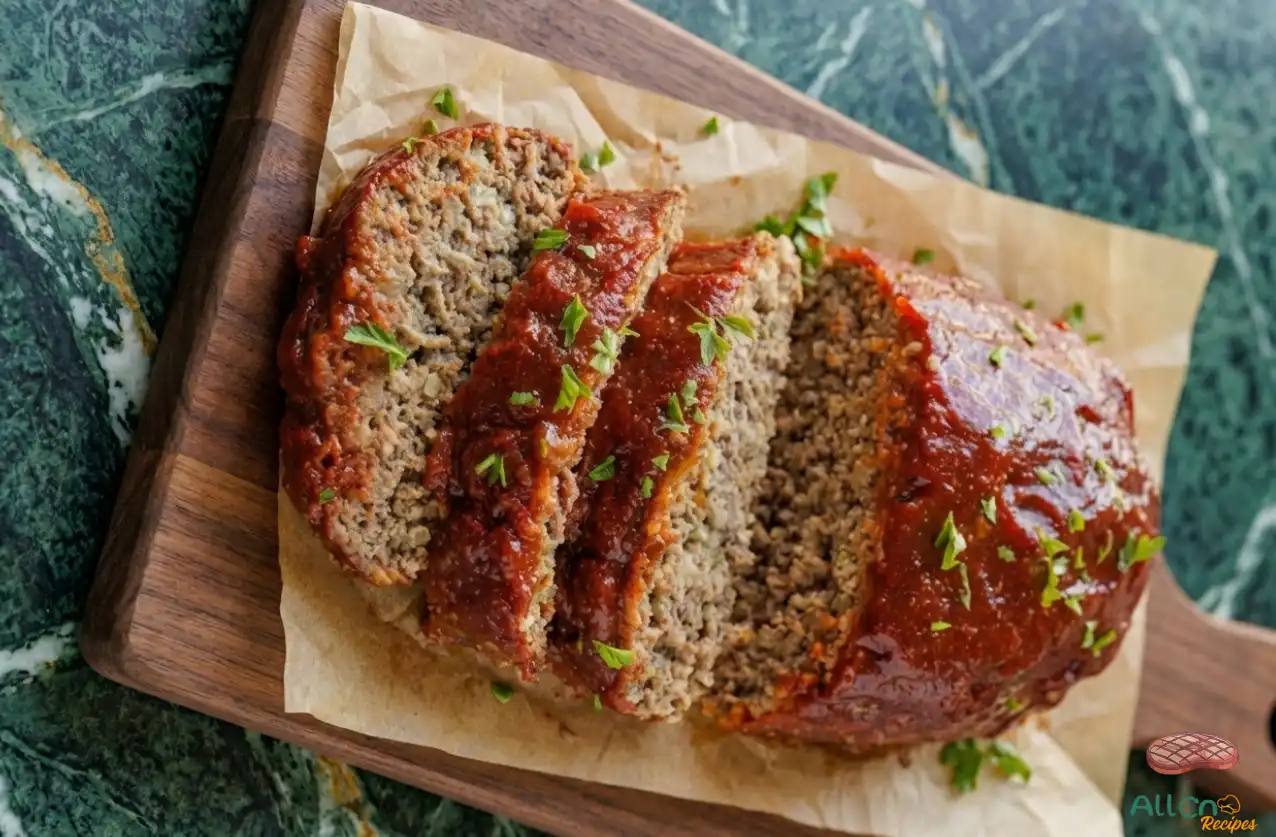
If you’ve ever wanted a meatloaf that feels rich and satisfying, without leaving you weighed down or second-guessing your choices, you’re not alone. A lot of home cooks crave that classic, steakhouse-level depth of flavor, but want a version that actually works in a real kitchen, on a real schedule. That’s exactly what this steakhouse-style meatloaf recipe is designed to support.
Steakhouse-Style Meatloaf (Rich but Balanced)
Prep Time: 15 minutes
Cook Time: 1 hour 5 minutes
Total Time: 1 hour 20 minutes
Servings: 8
Calories: ~335 per serving (estimate)
Recipe Type: Main course
Cuisine: American (Steakhouse-inspired)
Skill Level: Easy–Intermediate
Cost to Make: $$
Diet Notes:
- Can be made gluten-free
- Freezer-friendly
- Make-ahead friendly
Tools You’ll Need:
- Large mixing bowl
- Skillet
- Rimmed baking sheet or loaf pan
- Parchment paper or foil
- Instant-read thermometer (recommended)
Ingredients (Chosen for Flavor and Control)
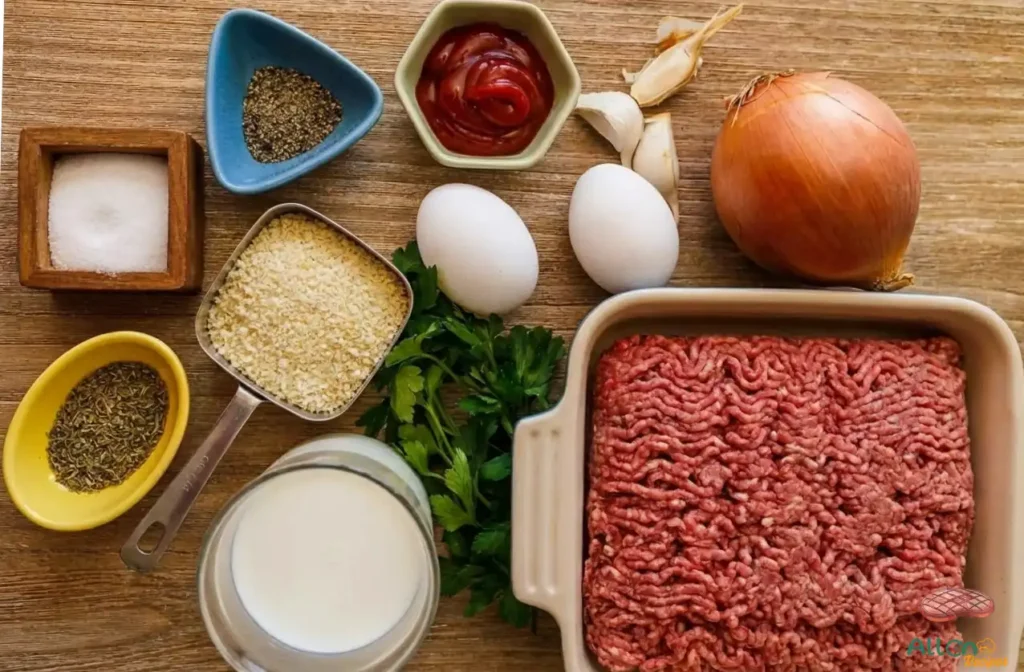
This ingredient list is intentionally familiar, but each item plays a specific role. Nothing is here by habit, and nothing is doing more work than it should. The goal is depth and moisture without heaviness, rich, but composed.
Meatloaf Base
- 2 lbs ground beef (80–85% lean)
This fat range matters. Leaner beef dries out before flavor develops, while fattier blends can feel greasy. This balance gives you richness without excess. - 1 medium onion, finely chopped
Sautéed first to soften sharpness and add subtle sweetness. Raw onion tends to steam inside the loaf, which affects texture. - 1 teaspoon olive oil
Just enough to coax flavor from the onion without adding unnecessary fat. - 2 large eggs
These bind the loaf gently. They’re here for structure, not density. - 3 cloves garlic, minced
Present, not dominant. You want warmth and savoriness, not a garlic bomb. - 2 tablespoons ketchup
This adds umami and a touch of sweetness inside the loaf, reinforcing the glaze rather than competing with it. - 3 tablespoons fresh parsley, finely chopped
Brightness matters when working with rich meat. This keeps the flavor from feeling flat. - 3/4 cup panko breadcrumbs (or gluten-free alternative)
Panko absorbs moisture without compacting. This is one of the key reasons the meatloaf stays tender. - 1/3 cup milk
Hydration for the breadcrumbs, which translates directly into juiciness once baked. - 1 teaspoon salt (adjust to taste)
Enough to season the meat properly without overpowering the glaze. - 1 teaspoon Italian seasoning
A background note, not a focal point. Think subtle herb warmth. - 1/2 teaspoon black pepper
Adds gentle bite without sharpness.
Steakhouse-Style Glaze
- 3/4 cup ketchup
The base of the glaze, smooth, tangy, familiar. - 2 tablespoons brown sugar
Just enough to encourage caramelization, not candy sweetness. - 1 1/2 teaspoons white vinegar
This is what keeps the glaze from feeling heavy. Acid is doing a lot of quiet work here. - 1/2 teaspoon garlic powder
- 1/2 teaspoon onion powder
These round out the glaze so it tastes finished, not one-note.
Technique That Keeps This Meatloaf Juicy (Without Making It Heavy)
This is the part most meatloaf recipes rush through, and honestly, it’s where things usually go sideways. If meatloaf has disappointed you before, too dense, oddly dry, or greasy in a way that feels careless, it’s rarely the ingredient list. It’s almost always the technique. The good news is that none of this is complicated. It just requires slowing down at the right moments.
The first key is how you build moisture before the meat ever hits the oven. Sautéing the onion might feel optional, but it isn’t. Raw onion releases water as it cooks, which can create pockets of steam inside the loaf. That steam pushes moisture out instead of distributing it. Cooking the onion first softens it, concentrates its sweetness, and lets it blend seamlessly into the meat. It’s a small step that quietly prevents a lot of texture problems later.
The second, and most important, factor is mixing. This is where support really matters, because overmixing doesn’t look dramatic in the bowl, but you feel it on the plate. Use your hands, stop as soon as everything is evenly combined, and resist the urge to “make sure.” Meat proteins tighten when overworked, and once that happens, no glaze can save the texture. The mixture should look cohesive but still feel soft, not compacted.
Shaping, Baking, and Why Resting Is Non-Negotiable
Shaping the meatloaf free-form on a lined baking sheet allows heat to circulate evenly and lets excess fat render away naturally. If you prefer a loaf pan, that’s fine, but understand the tradeoff. Loaf pans trap more moisture and fat, which can be helpful for very lean meats, but can feel heavy with richer blends. Either way, don’t pack the meat tightly. Gentle shaping keeps the interior tender.
Temperature control matters more than timing. Bake until the center reaches 160°F, then stop. Overbaking, even by ten minutes, dries out meatloaf faster than most people expect. And once it’s out of the oven, let it rest. Ten minutes isn’t a suggestion; it’s what allows the juices to redistribute so the slices stay intact and moist.
The Glaze , Sweet, Acidic, and Purposeful
This glaze isn’t here to decorate the meatloaf or make it nostalgic. It’s doing a very specific job: contrast. Rich meat needs something sharp and slightly sweet to keep each bite interesting, and this glaze is built to do exactly that, without tipping into sugary or sticky territory.
A lot of meatloaf glazes fail because they’re one-note. Too sweet, and the whole dish feels heavy by the second bite. Too acidic, and it fights the meat instead of finishing it. The balance here comes from restraint. Ketchup provides familiarity and umami, brown sugar encourages caramelization (not candying), and vinegar quietly lifts everything so the meatloaf tastes savory instead of dense. You may not consciously register the acid, but you’d miss it immediately if it were gone.
Timing matters just as much as composition. Applying the glaze after the meatloaf has already started cooking allows the surface to set first. This gives the glaze something to cling to, instead of melting straight off into the pan. When it goes back into the oven, the sugars concentrate, the edges darken slightly, and the top develops that steakhouse-style finish, glossy, savory, and just sticky enough.
How the Glaze Supports, Not Overpowers
Garlic and onion powder are used instead of fresh for a reason. Fresh aromatics can burn at high heat and turn bitter. Powders dissolve smoothly into the glaze, reinforcing the savory notes without drawing attention to themselves. The result is a topping that tastes integrated, not layered on as an afterthought.
If you’ve ever felt like meatloaf glaze was something you tolerated rather than enjoyed, this is usually why. When the glaze is intentional, it doesn’t announce itself, it completes the dish.
FAQ:
Why Does My Meatloaf Fall Apart When I Slice It?
This usually comes down to one of three things: slicing too soon, under-mixing just slightly (so the bind isn’t set), or skipping the rest period. Letting the meatloaf rest gives the proteins time to relax and reabsorb moisture, which is what creates clean, confident slices instead of crumbles.
Can I Add the Glaze Earlier to Save Time?
It’s not recommended. Adding the glaze too early prevents proper caramelization and can cause excess moisture on the surface, which softens the crust instead of finishing it. Waiting until the meatloaf has baked partway through gives you better texture, better flavor concentration, and a cleaner final result.
Leave a Reply